Living the language

PODCAST | After nearly a quarter of a century collecting data among the Mennonites of southern Ontario, Kate Burridge is identifying the broader linguistic implications of her research. She talks to Peter Clarke

01 October 2009


Tags: , , ,

Print this article Print this article
Email this article Email this article
Bookmark and Share
Follow Inside Story on

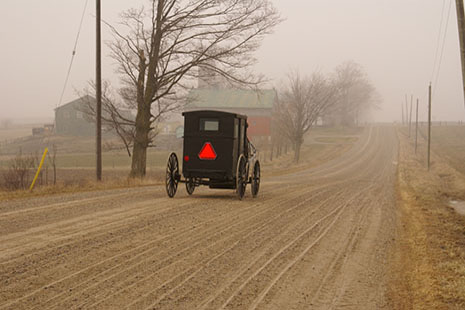
For the last twenty-three years, Kate Burridge, professor of linguistics at Monash University, has been travelling annually to Waterloo County in Ontario, Canada. There she spends research and social time with members of an Old Order Mennonite community similar in their beliefs and customs to another branch of the Anabaptist diaspora, the Amish. For over four hundred years, as a largely oral language, Pennsylvania German has survived alongside one of the globe’s great dialect crushers – English. This is the intimate language of home, family and community for these people who reject much of what the modern world takes for granted. Humility, simplicity and separateness are central to their creed. But what are the connections between the evolution of their language – Pennsylvania German – and their religion, culture and ethnicity? Is it an old language frozen in time or surviving because it is adaptable? Kate Burridge tells Peter Clarke that, after a generation collecting data around the cornfields of southern Ontario, some of the more universal linguistic implications of her research are becoming clearer.

Stream or download the audio here (36 mins 28 secs)

Peter Clarke is a Melbourne based broadcaster, writer and educator who teaches at RMIT and Swinburne universities. He pioneered national talkback on Australian radio as the inaugural presenter of Offspring (now Life Matters) on ABC Radio National.

Photo of Mennonite horse and buggy in Waterloo region, Ontario, by Sebastian Santa/ iStockphoto

Podcast theme created by Ivan Clarke, Pang Productions
Related articles

For regular updates on new articles...

Subscribe to our free weekly email newsletter

Your email address


Send us a comment

We welcome contributions about the issues covered in articles on Inside Story. Our approval process favours well-argued and clearly written comments! Your email address is never published or shared. Required fields are marked *.

*
*