Not dealing with climate and not dealing with the Greens

By focusing on negotiations with the Coalition, the government lost momentum and opportunities, writes Rob Chalmers

28 April 2010


Tags: , ,

Print this article Print this article
Email this article Email this article
Bookmark and Share
Follow Inside Story on

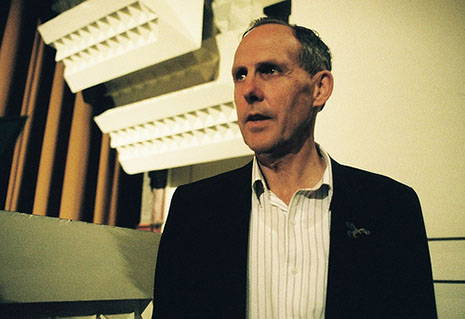
Above: Greens leader Bob Brown.
Photo: mugley/ Flickr

WHAT is it about the Greens that Labor so dislikes? Prior to the Tasmanian elections Labor premier David Bartlett assured voters he would not be doing a deal with them under any circumstances. In the event, Labor formed a minority government with two Green cabinet ministers. Had it not been for the Greens and the movements they represent, it’s likely that in Tasmania alone the Gordon below Franklin would have been dammed and the Gunns pulp mill development would have gone unchallenged. That aside, on so many issues – climate change, industrial relations, welfare, foreign relations and economic matters, for example – the Greens are closer to Labor than Labor is to the Coalition.

Federally, Green preferences boost federal Labor’s two-party preferred vote at every election. In 2007 Labor’s primary vote, at 43.3 per cent, was only 1.3 per cent higher than the Coalition’s. But with Green preferences the two-party-preferred outcome – 52.7 per cent for Labor and 47.3 per cent for the Coalition – put Labor into office. Despite this, the Rudd government goes first to the Coalition to negotiate Senate deals.

Bob Brown is not everyone’s cup of tea. But no one can doubt his achievement in boosting the Greens to the third political force in Australian politics. Mr Rudd is not impressed; despite a number of polite requests since last July, he won’t even meet with Senator Brown.

Penny Wong, minister in charge of the steering the Carbon Pollution Reduction Scheme, or CPRS, through the Senate, was happy to negotiate amendments with the Liberals’ Ian Macfarlane last year. Although she is courteous enough to meet with the deputy Greens leader, Senator Christine Milne, she has refused to enter into serious negotiations about changes to the scheme to deal with Green concerns. The Greens believe Wong’s behaviour is understandable, given her background: before entering parliament she was a union official in the forestry division of the CFMEU, whose members stand shoulder to shoulder with the loggers and pulpers against the Greens. Wong later became a staffer to Kim Yeadon, then Minister for Land and Water in the NSW government and definitely not a friend of the Greens.

Now, Labor has broken the most important promise of all – early action on climate change. The government has shelved the CPRS legislation until some time after the next election later this year. Yet only last week the prime minister told the Sydney Morning Herald that “on the question of climate change policy, our policy hasn’t changed. We maintain our position that this [the CPRS] is part of the most efficient and the most effective means by which we can reduce greenhouse gas emissions with least cost to the economy.”

Brave words, but the prime minister has not held a double dissolution election, the logical way to break the Senate deadlock. In the meantime, support for his position on climate change has eroded. A new Climate Institute poll shows that the percentage of voters trusting Mr Rudd most on climate change fell from 46 per cent last year to 36 per cent in April. Those believing there was no difference on climate change between Mr Rudd and Mr Abbott rose from 37 per cent to 40 per cent.

The Greens will hold the balance of power in the Senate after the next election and Rudd may have to rely on them to pass a climate bill. After another election defeat, of course, there could be a change of heart among the Liberals. Tony Abbott will be dumped and the next leader (perhaps Joe Hockey or, if he reverses his decision to retire, Malcolm Turnbull) would accept the government mandate for the legislation. (All this presumes Labor would win the election, which is highly likely, but not certain.)

But there is a broader problem with Labor’s approach to climate. Although some may say that it is better than nothing, the CPRS legislation is badly flawed. Its unconditional target for emissions reductions – 5 per cent on 1990 levels by 2020 – is way too low given that the science calls for a 40 per cent cut. The Greens say the bill should stipulate at least a 25 per cent target, and they prefer Ross Garnaut’s interim approach in the absence of a decent emissions trading scheme. Professor Garnaut suggested setting a carbon price beginning at $20 a tonne (in 2000 dollars) rising to $24.50 in 2011 and $26 after that. Polluters would be taxed on these levels, and Garnaut suggested compensation to householders could flow from revenue collected. This would also mean a quite light tax for a low-polluting industry such as car manufacturing but a heavier tax for high polluters such as coal-fired power-generating plants and oil refineries.

In the past week even more criticism has been heaped on the CPRS for its generous handouts to polluters by way of compensation. The Grattan Institute’s new study shows that the compensation handouts to “trade exposed industries” would be “a $20 billion waste of money.” It assembled evidence that only two industries – cement and steel – would deserve assistance. Alumina, liquefied natural gas and coalmining would remain internationally competitive without assistance; granting them free permits would amount to supporting industries that are likely to leave Australia anyway.

The Grattan Institute’s energy research fellow, Tristan Edis, estimates free permits cost about $59,000 per employee on average, soaring to $161,100 in the aluminium industry and $103,300 in liquefied natural gas. The institute’s CEO, John Daley, explains that most of the proposed compensation would be wasted because most of the industries are unlikely to move offshore and will remain very profitable with or without a carbon price. Given that the institute’s founders include BHP Billiton and the federal government, this is telling criticism indeed. Mr Rudd’s authority and credibility in the parliament and the Labor caucus have been greatly diminished. •


Rob Chalmers, editor of Inside Canberra, is the longest serving member of the federal parliamentary press gallery

From the archive: Richard Dennis on the deal the government should have struck earlier this year >

Related articles

For regular updates on new articles...

Subscribe to our free weekly email newsletter

Your email address


7 Comments

  1. Paul D'Agostino added this comment on 30 April 2010 | Permalink

    Hi,

    Rob Chalmers can’t count.

    The ETS needed coalition or minority senator votes to pass. The Greens could not deliver a majority vote.

    The Greens voted against the ETS because it was not perfect or “theirs”.

    The opportunity to pass the ETS was there but the Greens choose to oppose it.

    The Greens and the Coalition are responsible for defeating the ETS.

    When or if they have the balance of power then there will be a point to negotiating with the Greens. Then the Greens – like the Democrats before them will either need to compromise their ideals like everyone else. They could end up being obstructionists and vote with the Coalition – even in contravention of their own expressed policy -like their upper house Green colleagues do in Victoria.

    Wishful thinking doesn’t match reality in Rob’s article.

    Regards

    Paul D’Agostino

  2. admin added this comment on 30 April 2010 | Permalink

    Thanks for your comment, Paul. I think the point Rob is making is that striking some sort of deal with the Greens would have changed the dynamics of the debate (as would a double dissolution of course). No one knows what the results would have been – how Nick Xenophon and Steve Fielding would have reacted and what the two Liberals who eventually crossed the floor over the emissions bill would have done. And the Grattan Institute reports suggests that at least some of the Greens’ reservations about the bill were well-founded.
    Cheers,
    Peter Browne

  3. Glen Klatovsky added this comment on 30 April 2010 | Permalink

    I am constantly amazed that people keep on thinking that the Ausralian Labor Party is a centre left party. The ALP is not closer in any way to the Greens than they are to the Liberal Party. Perhaps the left wing may be on some issues, but the left of the ALP has very little influence.

    To have this misconception must make one feel like they are experiencing the Groundhog Day effect. The ALP give big polluters lots of compensation in designing their emissions trading scheme. That must just be a blip. The ALP take further extreme measures to give the perception that they are tough on boat people (noting the core infrastructure of the so-called illegal refugee program was created by the ALP). Just another blip. The ALP roll over and play dead on the Tampa. Another blip. Gough and East Timor. Blip. The ALP effectively create school league tables. Blip. The ALP continue to provide massive funding to wealthy private schools. Blip. The continuation of the Territory intervention. Blip. Welfare quarantining. Blip. Blip. Blip.

    We have two Centre Right political parties, the ALP and the Liberals. It is true that the ALP is slightly more likely to move to the left than the Liberals, but both are fighting for that couple of percentage of voters who sway most elections. And these voters, like most Australians, are conservative.

  4. tony kevin added this comment on 30 April 2010 | Permalink

    A balanced analysis by an authoritative Canberra political journalist – and who doesn’t have a dog in this fight.

  5. Tim added this comment on 30 April 2010 | Permalink

    Sorry, Peter, but I think Paul makes a really sound point. Negotiating with the Greens wasn’t going to get the legislation through. And you’re right, no-one knows what might’ve happend, but the idea that Fielding would’ve been convinced by some compromise between the govt and the Greens seems about the least likely outcome. And even if that did happen, the idea that Xenaphon would be convinced by a deal that Fielding would support just piles improbability upon improbability.

    I’m no fan of the govt dumping this legislation, but the fact is, they negotiated with the Libs bc the Libs could get it thru the Senate. What’s more, the Libs supported it! It wasn’t until the Rightwing deniers in the Party put their foot down and people like Tony Abbott changed their minds that the legislation failed.

    So sure, if the Greens hold the balance of power after the election, talk to them. Get it through. But it seems a little naive to think a deal with the Greens was most of what stood between success and failure this time round.

  6. Jonathan Doig added this comment on 1 May 2010 | Permalink

    While I agree with the thrust of the article, it glosses over the most recent and most damning chapter in this sorry saga: Rudd and Wong’s rejection of the Greens’ proposal for an interim carbon tax, following the failure of the CPRS.

    This had a good chance of passing the Senate with support from Xenophon and either Troeth or Boyce, both of whom crossed the floor to vote for the CPRS. And unlike the CPRS, the Greens/Garnaut proposal didn’t lock in failure.

    To respond to the Green-bashing commenters, the CPRS was worse than nothing, because it:
    * locked in an anti-science 5% target as an emissions floor as well as a cap;
    * allowed the market to be flooded with dodgy overseas permits as shown in the Treasury modelling (http://tinyurl.com/chart3-6); and
    * created a barrier to genuine action by turning permits into “personal property” (CPRS Bill #2, s94), subject to compensation “on just terms” (ie $billions) if the government later moved to reduce pollution (ie acquire those permits).

    There are a couple of real clangers in this article, too.

    “Had it not been for the Greens and the movements they represent, it’s likely that in Tasmania alone Lake Pedder would have disappeared…”

    I wish this were true, but the original, natural Lake Pedder did in fact disappear when it was dammed in 1972, to become the much bigger artificial Lake Pedder.

    “Alumina, liquefied natural gas and coalmining would remain internationally competitive without assistance; granting them free permits would amount to supporting two industries that are likely to leave Australia anyway.”

    Err, that’s three industries. I think there’s something missing just before the semi-colon, such as a full stop and a new sentence like “Aluminium smelting is far less carbon-intensive overseas and Australian oil refineries are already on the way out”

  7. admin added this comment on 1 May 2010 | Permalink

    Thanks Jonathan – I’ve fixed those two errors and will prevail on the editor (me) to be more vigilant next time!
    Cheers, Peter

Send us a comment

We welcome contributions about the issues covered in articles in Inside Story. Well-argued and clearly written comments that carry a real name are more likely to be published. Because all comments are moderated, they will not appear immediately. Your email address is never published or shared. Required fields are marked *.

*
*