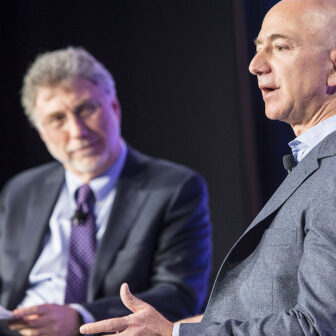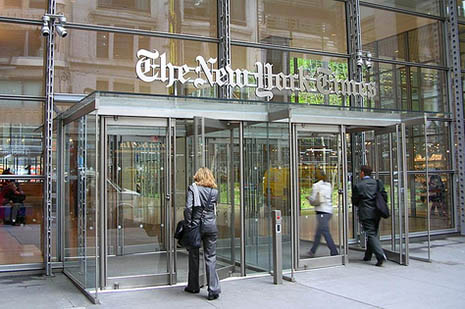
With the Australian’s online paywall up and running, Peter Clarke talks to the former publisher of the Wall Street Journal, Gordon Crovitz, Crikey editor Sophie Black and the University of Canberra’s Jason Wilson about the Australian’s experiment, the success of the New York Times’s “porous paywall,” and the broader challenge of persuading readers to pay for online content.
Let us know what you think – scroll down this page to comment…
[display_podcast]

Guests
Gordon Crovitz, Co-Founder of Press+
A longer version of the interview with Mr Crovitz is available here
Sophie Black, Editor of Crikey
Jason Wilson, Assistant Professor in Journalism at the University of Canberra
Reading
The Australian’s paywall explained
The New York Times paywall: How it works
September 2011 online subscriber figures for the New York Times

Peter Clarke is a Melbourne-based broadcaster, writer and educator who teaches at RMIT and Swinburne universities. He pioneered national talkback on Australian radio as the inaugural presenter of Offspring (now Life Matters) on ABC Radio National. Podcast theme created by Ivan Clarke, Pang Productions. Thanks to RMIT University’s School of Media and Communication for the use of their studio.


4 Comments
I wish they’d put the Herald-Sun and the Daily Telegraph behind a paywall as well…
I look at many English language newspapers, some daily, some weekly.
AlaskaDN, Guardian Weekly, Lithgow Mercury, NZ Herald,Turkish Daily,Halifax Herald,Nova Scotia News, Toronto Globe, Japan Times, Irish Independent, SMH, to name a few, and my favourite The Australian.
I accepted The Australian offer to sign up for three months free access to their full news service.
I find the lumpy hesitation and delays between news pages extremely frustrating. Logged in, remember me, or not, the hesitation is the same.
None of the other publications have this frustrating delay. None of them charge for service.
If The Australian doesn’t sort this by the end of November; SMH here I come.
Agree Jeff Flanagan, and I would add The Economist and Aljazeera as excellent free international media online.
Further, why would one pay a subscription but then not be afforded the courtesy of having reasonable and fair comments published (unless they support the generally partisan social conservative and political campaigning views)?
Pay-for-use spells the end of infomercials, shock jocks, and regurgitation hacks, and the beginning of consumer-led demand for genuine journalism.
I am a committed reader of premium journalism and I am happy to pay for quality opinion, analysis, and news, but not for the sort of dogma-based writing which is entrenched in press driven by advertisers.
I expect my services to declare their interests up-front; if I don’t know who is paying the bills, then I will not subscribe.