AAP Image/ Tony Phillips
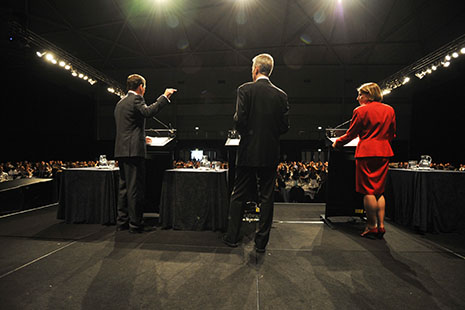
QUEENSLANDERS will have a chance to pass judgement on the Bligh–Beattie Labor government at the polls on 21 March – and to respond to the newly minted, hybrid conservative Liberal National Party led by Lawrence Springborg, out for his third trot around the paddock seeking the Sunshine State premiership. If she can hold off the LNP challenge during a global financial crisis while presiding over a chronic deficit in state-wide infrastructure, Anna Bligh would become the first woman elected to office as a state premier. How different is Queensland from the rest of Australia in 2009? And how divided between south-eastern urbanites and more traditional rural and regional voters? Brian Costar, Professor of Victorian Parliamentary Democracy and director of the Democratic Audit of Australia at the Institute for Social Research at Swinburne University, tells Peter Clarke, even with an aggregate 8 per cent swing required to change government, it could be a close-run thing.
Stream or download the audio here
Peter Clarke is a Melbourne based broadcaster, writer and educator. He pioneered national talkback on Australian radio as the inaugural presenter of Offspring (now Life Matters) on ABC Radio National. Podcast theme created by Ivan Clarke, Pang Productions.



One Comment
I think the analysis in this article is partially spot on but also deeply flawed. It will be hard to estimate the backlash in the community about the state of “health care” in Qld and the frustration amongst the community about lack of infrastructure, roads and other basic services.
I am surprised the media hasn’t taken up the issue. We all know there is massive internal migration drift from other states in Queensland – and the chronic lack of investment to account of this population shift (which has been going on for 20–30 years) means poor transport, full buses driving past harried workers, and traffic jams for hours and hours. In the inner city one still finds two lane roads diverge back into single lanes!!
The election might be close – but it certainly won’t be a mandate. The choice is not between the main parties in this election – neither of them can really claim they deserve to govern. It is between the minor parties and all the independents.